From Sasha Hirsch:

When I’m not wearing my admissions hat—or, in this case, shirt and tie—I am helping to plan this year’s February Orientation. This is an orientation for the year’s February entrants, affectionately called Febs. The planning process has just taken off and we have our final round of Feb Leader interviews tomorrow morning. The goal of Feb orientation is to create a tightly knit group of 90 to 100 new students so that each of them will have strong support networks when the rest of the school returns. From the hoe-down to a day at the Snow Bowl to the infamous Saturday night Dough Boys concert (a faculty band), it is an orientation envied by all—students and faculty alike—who have not experienced it. As the weather turns colder and the sun sets earlier and the final leaves fall to the ground, there are 95 incoming Febs scattered across the globe, all with the same thought: I can’t wait till February!

In the Senior Fellows room at Emma Willard, we respond in our down jackets, gloves and hats, saying, neither can we!

Wham City

Last weekend I had the privilege of seeing one of my favorite musicians, Dan Deacon, in concert on campus, and predictably, the show was bonkers.  Deacon was brought to campus by the Middlebury College radio station, WRMC 91.1, and he performed to a sold-out crowd in the Bunker, Middlebury’s student-run nightclub.  Over the past few years Dan Deacon has become well known for both his expressive, explosive brand of electronica and his wild live shows, which feature Deacon orchestrating the whole thing from behind a folding table overflowing with all sorts of pedals, switches, and wires.

With the release of his latest album, Bromst, earlier this year, Deacon took a departure from his usual performances, instead touring with a fourteen-piece ensemble that featured three drummers.  Needless to say, his already riotous performances became all that much more overwhelming.  Unfortunately, WRMC’s limited budget and the Bunker’s limited floorspace kept Middlebury from experiencing the unorthodox orchestra in full force, although Deacon’s performance as an individual was still electrifying.

One of Dan Deacon’s trademarks over the past few years has been the crowd participation in his shows.  Deacon gets as close to the crowd as possible, performing solely behind the aforementioned folding table, which he keeps on level with the audience, encouraging everyone to surround him completely.  Additionally, he often pauses between or during songs to involve the audience in a number of silly games and exercises — asking everyone to run in circles, interact with their neighbors, or do crazy dances, to name just a few.  For his Middlebury show, the antics included team dance-offs, the distribution of “antidote for poison” via highfive — which erupted into a swirling vortex of running people (I know, it makes no sense in writing…you had to be there), a synchronized interpretive dance led by one of his roadies, and a human tunnel that snaked outside of the building before returning to the dance floor.  It was wild.

All in all, the concert was a great time, and most people I spoke to said they loved the show, even though they hadn’t heard of Dan Deacon prior to attending, let alone listened to his music.  And although some people may have been put off by the audience games, from the number of smiling faces I saw during the epic interpretive dance to the song, “Of the Mountains”, the doubters were limited to a small minority.  Most importantly, I loved it, which is what really counts.  I got chills during a number of songs, and his decision to close with “Wham City”, an eleven-minute epic and my personal favorite, was inspired.  Dan Deacon (and WRMC), well done.

To get an idea of his live performances, check out the video below, from a concert he did in Brooklyn, NY this past spring:

We live in a liquid world. This is an idea that I’ve spent most of the fall semester thinking about, thanks to my Modern and Post-Modern Political Thought senior seminar. I can’t seem to separate it from the rest of my life, a common happening in Middlebury classes. In part it’s about this idea that society is so fluid and so constantly changing that we don’t really have anything left to hold on to, to ground us. I think we all see this in today’s world, everything from Twitter and Facebook to day planners filled to the brim with assignments, meetings, and clubs. Life moves fast and in a lot of different directions, and we don’t always have time to just breathe. You see it in the Middlebury community as well, with lots of driven, dedicated, and well-rounded students who are engaged in all facets of the College, constantly running from event to event. Don’t get me wrong, I love that Middlebury students are so involved. It’s a huge part of why I chose to come here. Midd students don’t just want to make a positive impact on the world, they do something about it, and yes that sometimes means late nights and full calendars. And let’s be honest, I’m sure all of you in your senior year of high school know this feeling all too well.

I think one of the problems with this fast-paced, liquid life is that it is really easy to get so engrossed in what you’re doing that you don’t really take the time to reflect on it. Even though Middlebury facilitates this lifestyle, I’ve come to realize in my four years that it’s also a really good place to slow down. Maybe it’s because I just had ACL surgery and actually can’t move as fast as I normally do, but I’ve come to see Middlebury as a place of contemplation and reflection. It’s hard not to be thoughtful when you’re tucked between the Green Mountains and the Adirondacks in a place that is more naturally beautiful than any other I know. I had family come visit this weekend and just walking with them around campus and town helped me to remember all the wonderful things here and how important it is to step back and take the time to appreciate them. Students find lots of ways to do this, whether it’s spending a Saturday hiking and climbing or volunteering in the community surrounding the College. My two favorites are volunteering at the John Graham Emergency Shelter in Vergennes (I’m actually headed there to cook dinner with friends as soon as I finish this post!) and walking on either the Spirit in Nature trails or the Robert Frost Interpretive Trail. Neither walk is all that long or difficult, but the Spirit in Nature paths have different quotes about nature from different faith groups, everything from Atheist to Buddhist to Quaker and it’s nice to just walk quietly through the woods. Robert Frost actually lived in Ripton, the next town over, and clearly appreciated the beauty and contemplative nature of Vermont. His path actually starts with two directions…so you can take the road less traveled!

I feel like we’re very much in the same position right now, as seniors, whether it’s worrying about what college you’ll end up attending or finding a job before May 23rd.

A few weeks ago, Lama Tenzin, the Peace Emissary to the Dalai Lama, spoke at Middlebury and talked about the importance of mediation and simplifying. Hands shot into the air asking exactly how we should mediate, how we should simplify our hectic lives, and ultimately he had such a different worldview that he didn’t understand the struggle; he just kept saying, “Live simply.” Of course I’m not saying stop doing it all—based on my calendar, that would be hypocritical—but definitely take the time to soak it all in, be reflective and spend time in the present, enjoy senior year. I’m a firm believer that it all works out the way it is supposed to. Middlebury did for me! So slow down, enjoy and make sure you’re doing what makes you happy because believe me, it goes by faster than you’ll ever imagine!

-Hannah

       From: Cassidy Boyd

       This past weekend, Middlebury hosted the 3rd Annual Quidditch World Cup. For those of you who don’t know what “Quidditch” is, it is a sport played upon flying broomsticks that was brought to fictional life by J.K. Rowling’s novel series “Harry Potter.” Middlebury, under the leadership of students Alex Benepe and Xander Manshel, brought Quidditch to college life here at Middlebury initially as an intramural game (played only among Middlebury teams). However, word quickly spread across the lands of this magical sport being played by mere humans (unfortunately sans flying) and other schools wanted to join in on the new sport. Once McGill University in Montreal became involved, collegiate Quidditch had reached the level of international phenomenon. This year there were 26 schools present for the now annual Quidditch World Cup, and I am happy to report that our Middlebury team once again seized the title of international Quidditch champions.
       I must mention that there are mixed feelings about Quidditch on campus. Some people resent the fact that we have become somewhat famous for something they consider to be “lame.” Regardless of how one may feel about the actual sport, the World Cup that was held on our campus pointed out to me things that I continue to find fantastic about this school. First of all, the hundreds of strange new students on campus here for the tournament from schools across the country put our school’s welcoming nature to test. Despite the sudden invasion of foreigners, I saw these students meld into our community throughout the weekend. They were taken in by Middlebury students into their already over-crowded dorm rooms, they were eating in the dining halls, and engaging in the Middlebury social scene at night. I was impressed to see that despite all of these visiting students being Middlebury’s “competitors,” that they were not only welcomed here, but even integrated into our community. Secondly, the actual event typified for me the collaborative culture at Middlebury that is fostered by our focus on community. Despite the students here being incredibly busy with their own varied commitments (as Jean Lin’s previous post shows), I believe that at the end of the day, everyone here is willing to help their fellow students to create something great. Although this event focused on the club sport of Quidditch, commentary provided by members of the improvisation group “Otter Nonsense” kept everyone laughing and performances by student band “Power Owl,” “a capella groups “The Mountain Ayres” and “The Mamjamas,” and RIDDIM Worlde Dance Troupe (of which I am a member!) truly brought the festivities to life–and I’m not just saying this because I was one of the people performing, I promise. Although this was a special occasion, this kind of collaborative spirit is something I see year-round both in and out of the classroom at Middlebury. The vibrant and supportive community here at Midd is something I love and, being a senior, something I will certainly miss.

From Peter Baumann:

As I embarked on the odyssey known as the college application process four years ago this Fall, there was little doubt in my mind that I wanted to attend a small, liberal arts college. Raised in a household where my Father’s liberal arts Economics degree turned into law school and my Mom’s liberal arts Classical American Studies degree turned into business school, I was baptized early into the religion of liberal arts. Having no idea where I wanted to be in four years, the idea of an education centered around breadth as opposed to depth seemed both intriguing and practical. The largest school I visited had 5,000 kids, and a school that did not list liberal arts amongst its strengths was unceremoniously dropped from my list. 

Today, with the collapse of the financial markets having tightened the job market considerably, I suddenly find the efficacy of my liberal arts degree in question. During interviews with financial institutions I find myself answering more questions about my major (political science) than I do about my 2008 summer (spent at an investment bank). Compared to students graduating with finance degrees, accounting degrees, and other specialized majors, I am suddenly crumbling under the weight – or lack thereof – of the very breadth that attracted me to schools like Middlebury in the first place. 

Yet after silently questioning that choice, as well as the choice to pursue my passion for political science over seemingly more practical economics or hard science degrees, I have emerged even more firmly in the pro-liberal arts camp than I was before. Since I arrived on campus I have spent four years synthesizing quantitative and qualitative information across disparate subjects and classes — eventually emerging with a cohesive academic experience that is collective instead of individual. As a liberal arts student, college is my specialization; learning, thinking, and processing are my focuses.   

In my job at the Admissions Office I am often asked if Middlebury has prepared me for the next step in my life. The answer is an unequivocal yes. More importantly, Middlebury has prepared me for whatever that next step may be and however that next step might change as I am in the middle of taking it. In a world where the circumstances surrounding everything we do are constantly changing, I have been given the tools to adapt to whatever challenges arise, and the skills to succeed in whatever position those new challenges force me into. Yes, the world around us has changed, but in spite of that – in fact, because of that – the practicality of a liberal arts education has not. It remains the best place to grow as a person and as a thinker, a place where individual intellect and productivity are cultivated on multiple levels across a range of subjects. Now, when asked in an interview about the college choices I made four years ago I answer that I am proud of my decision to attend Middlebury and pursue my passion — and would not trade it for anything in the world.

On the future:

Everything is going crazy.

Or so I think, while sitting in the audience at this year’s Board of Trustees Retreat, held just up the mountain from Middlebury at our Bread Loaf campus in Ripton, Vermont.  The Board is meeting this fall to discuss the viability of the traditional liberal arts model as we move into the next twenty or thirty years.  In the time leading up to last year’s financial collapse, the world of higher education saw unprecedented spending on the part of colleges and universities as increased competition for students and rankings led to a veritable arms race for academic domination.  Unfortunately for them (and, by extension me – and us), much of this expansion was financed by heavy borrowing and overspending on endowments, so when the rug was pulled out from under us by the global economic meltdown, institutions were left scrambling to bring costs back in line with their budgets.  Middlebury has been affected by the meltdown in just as many ways as any other college, but from the crisis we’ve taken the opportunity to completely reconsider undergraduate education and how it is provided.  Which brings me back to where everything was going crazy.

I was sitting in the Little Theatre on the Bread Loaf campus as various constituencies from the college made presentations about how to reframe the education we provide and ensure that Middlebury can remain a leader in higher education well into the future.  I had been invited by Dean of Students Gus Jordan as one of four student representatives at the meeting, an opportunity to meet the trustees, help shape the direction of the school, and, being a senior, to drop subtle hints to the trustees about my job prospects next year.  So, aside from trying to look as employable as possible, I was there on behalf of the student body to make sure that our voices were heard, too.  I sat with two of the my student colleagues – we had placed ourselves as close as possible to the roaring fire in the fireplace, as, it being the Bread Loaf campus and thus normally used for summer programs, the theatre did not come with the benefit of insulation, and it happened to be an unseasonably cold day in October.  The mountains surrounding campus were dusted in white, a spectacular sight, albeit one better enjoyed from the confines of a warm room than a freezing barn filled with most of the campus’ movers and shakers (shaking, in this case, mostly from the chill).

Temperature aside, the conversation was lively.  While students are hardly insulated from the realities of the outside world – and particularly how those realities influence our experience here – the retreat still offered the chance to see beyond the message put out by the administration and to understand exactly how Middlebury got to where it is and how it might continue into the future.  I’ll spare my readers any discussion of the boring interworkings of the school budget or its specific challenges (plus, I’m pretty sure that I was sworn to secrecy and would be removed in the dead of night if I spilled the beans), but what I did find particularly interesting is the thought of how one might structure an undergraduate education if given a clean slate.

As the Board considered proposals that ranged from simple changes to complete evolutions in the college process, I found myself wondering how it is that I might have chosen to structure my education, if given the choice.  I think we all take for granted that college is a four year process, and one that is more or less the same wherever you go.  It’s easy to get caught up in that system, but for everyone – and especially prospective students that might feel that they’ve been running on the same educational treadmill their whole lives – it’s important to keep in mind the purpose of an education.  Although my three and a half (and counting…) years here have been some of the best of my life, I did find myself considering whether I might have gotten more from a different program of study.  How would my experience have changed if I had gone abroad earlier?  If I had done more work outside the classroom?  If college wasn’t four years at all, but three, or five?  The possibilities were endless.

Which is part of why considering what college might be – what Middlebury might be – was so provocative.  As a senior, I sometimes feel this curmudgeonly urge to make sure that things stay the same, to preserve Middlebury as I knew it as a freshman and as I know it now.  But I do need to keep in mind that things change, and always have, and that perhaps Middlebury might be able to accomplish more by changing from what I have come to expect.  So as I listened to each new proposal – all seemingly crazier than the last – I tried to maintain some sense of objectivity and be more focused on practicality and less on nostalgia.

In the end, few real policy changes emerged from the retreat – after all, it was provided more as a provocative thought experiment than anything (and provocative it was), and everyone realizes that institutional changes happen slowly, and only after careful consideration.  A day of debate in the frigid confines of the Bread Loaf campus hardly qualifies as such, although it is a start.  Any major changes will take time, but it is important to keep the future in mind.

As the day wound down over dinner and drinks in the (thankfully) heated Bread Loaf Inn, I had the chance to talk to many more of the trustees individually and express opinions outside of the planned program of events.  Getting to know the trustees and administrators of this school has been one of my greatest privileges this past year, and our conversations reveal them to be far more clued in to the students’ concerns than many might imagine.  So while I was at first taken aback by what seemed radical changes in how one looks at college, I realized that if there is anything I took from the day with the trustees – the inside knowledge of the school, the influence over its future course, but sadly no job offers – it is this: they are listening.

atypical days

Things are finally quieting down…. at least for the upcoming week. It’s strange to look at my planner and not see at least one meeting scheduled for each page. There’s really no such thing as “a typical day” for me. Aside from classes, I have cheerleading/gymnastics practice, Middlebury Open Queer Alliance (MOQA) meetings, various volunteer activities, and work in the admissions office. Despite some level of regularity, there’s always something new and different going on.

For instance, MiddCheer was at the tailgate/homecoming football game this afternoon welcoming fans and spreading school spirit. Soon, we’ll be working on a routine for the Global Rhythms talent show in November.

MOQA just finished hosting a series of events for “Coming Out Week” last Friday. Currently, my co-president and I are finalizing plans for the Transcending Boundaries Conference and working with the Counseling Center to offer more support to students who are questioning their sexual identities.

As for volunteering, the projects vary from building a fence for an emergency homeless shelter to making baby blankets for newborns in neonatal intensive care units.

Finally, something we’re all familiar with—the college application process. It’s beginning to get busy in the admissions office, and it’s only going to get busier. I’ll be excited to see full houses at the information sessions as more and more prospective students are planning their campus visits.

For at least the upcoming week, I’ll be enjoying longer lunches with friends, more hours of sleep, and the beautiful Vermont foliage on my walks to class.

-Jean Lin

Leaf Peepers

The “peepers,” as we call them, are everywhere; on the sidewalks, in tour buses, on bike tours, on campus, in town…everywhere.  The other day I saw a leaf peeper wander into the middle of the road, camera to the sky, head tilted upward, stop and click, just to get that perfect juxtaposition of Vermont church to golden brown maple resulting in a serious traffic jam. It really makes you stop and think: These people are coming from far off lands just to look at the chlorophyll process shutting down.

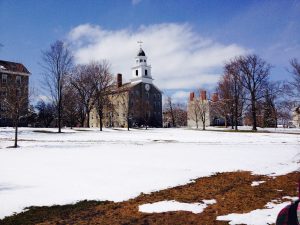
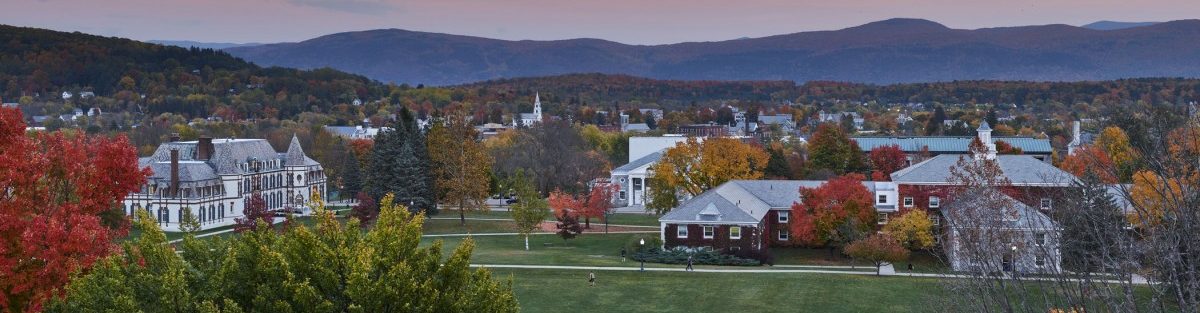
I may live here but don’t think I take the explosion of color across the mountain landscape for granted.  Fall is easily my favorite semester here.  I’ve pretty much shaped my schedule around falls in Middlebury.  I went abroad in the spring and made sure I could enjoy one last fall before graduating in this February.  To watch the gradual transition from lush, verdant summer to desolate, cold November is incredible.  At first it starts up in the mountains and slowly makes its way down to campus.  Each day different trees on campus change as they get ready for winter.  Everybody has their favorite trees which peak at different times throughout the fall in this process.

Alas, this process is beginning to end and the bare branches are starting to emerge from the colorful garb of early October.  This is my last foliage season in Vermont (at least for a while) and it’s a shame to think that after this fall I will only be a tourist making a weekend excursion to the north-country.  There is an upside to the falling leaves however:  something else is going to start falling very soon and I am very excited…

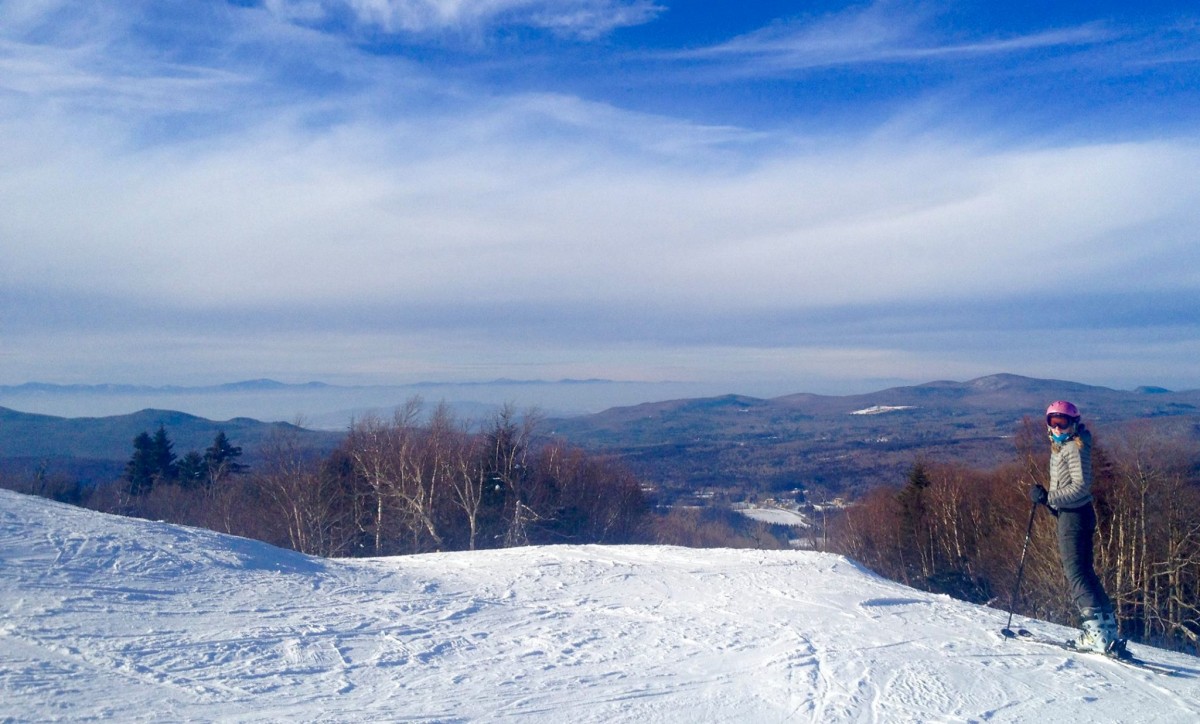
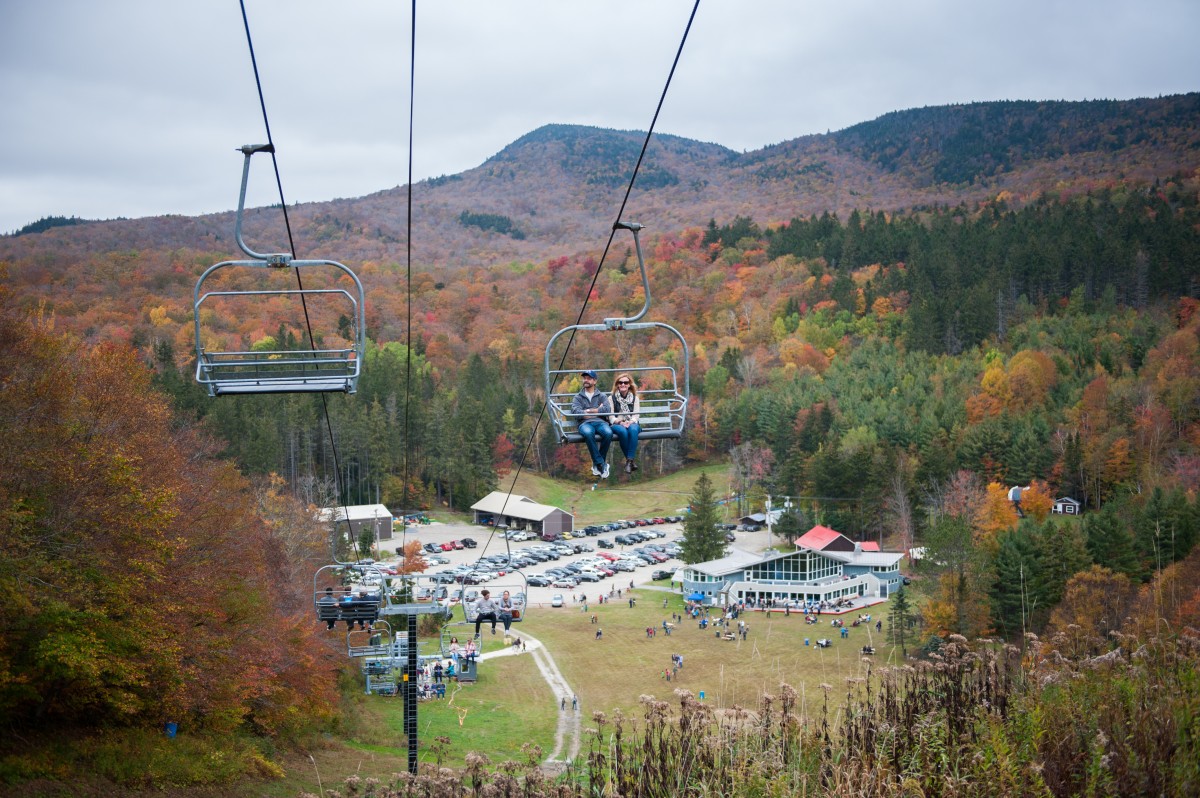
The Middlebury College Snowbowl

David Small

Making Connections

From Katie:

I’ve always been the type to get excited about overlap in different parts of my life: when things I learn in classes coincide with practical experiences, or when something familiar unexpectedly pops up in a reading or class discussion. As I get farther along in my joint major of Spanish and Geography, this seems to happen more and more often in my classes. I am now, unbelievably, beginning the first semester of my senior year, which has been a bit of an adjustment considering I spent my junior year abroad. I studied through Middlebury’s programs in Cordoba, Spain in the fall and Valparaíso, Chile in the spring, a fantastic experience that really improved my Spanish and gave me valuable exposure to other cultures. Back on campus, I have been reflecting on my experiences and relating them to my life here at Middlebury. It’s great to have real-life, practical situations that I can draw on to exemplify the things I’m learning in classes.

One course I am very excited about this semester is a Senior Seminar in the Geography department called “Landscape and Memory,” a discussion and writing course directed toward senior majors who are especially interested in the subject area. In the second week of classes, we are already delving into theoretical issues of landscape and the social process of memory, and how each influences the other over the course of time. Being asked to think about material like this again after a year spent in foreign universities in a very different education system is blowing my mind a little bit. But I’m working my way past it, and getting quite enthusiastic about taking classes with such engaging material.

As the class is entirely seniors, and so many Middlebury juniors choose to go abroad, students are returning from all over the world. The professor (herself Israeli) recognizes this, and has asked us to delve into our experiences abroad and draw on that material to use in class discussion and writing assignments. This led me to wonder what aspects of my time in Spain and South America might relate to issues of collective memory, national identity, and human-made landscape, and something sparked my attention as I was reading an article for my first paper of the semester. It talked about heritage, its importance to societies, and its inscriptions on the landscape.

Valparaíso, Chile, where I spent my spring semester, was designated a UNESCO World Heritage Site in 2003. Since then, the patrimonio cultural, as it is called, has become a somewhat controversial topic among city residents. It is viewed as something exterior, intended for tourists, and it doesn’t have a notable impact on everyday life in Valparaíso. This disconnect between the intention of the site designation (to celebrate the heritage of a people as represented in its architecture and history) and the way it is seen by Chileans (a title imposed by an outside organization, very different from the customs and traditions with which they celebrate heritage on their own terms), really caught my attention. I did some related research for a project while in Chile, and in talking to Chileans about the patrimonio, I found that most people thought it was positive on some level, but not something to be proud of, and certainly not something representative of life in Valparaíso. I am now excited to do some background research and begin exploring a topic that most likely has not received much attention since the inception of the site six years ago in the hopes that I may be able to use it in an essay or project later on.

These first two weeks have also made me realize how glad I am to be back in an environment where students are excited about their classes and where I get the chance to study the most interesting subject matter. I had a great experience abroad, and I learned more than I ever could have imagined, but I also learned to appreciate the superior education I am receiving at Middlebury and the engaged community to be found among students here. Although I miss my two homes abroad, I am glad to be able to find connections with my experiences there in the classroom here on campus, and to continue exploring and expanding my understanding of new cultures from a distance.

Welcome to the Senior Admissions Fellows blog!

The Senior Admissions Fellows Program was started in 2008 with five seniors working in the Admissions office, conducting interviews, leading group information sessions and assisting on other special projects. This year we have expanded the program to include twelve seniors from across the country and around the world, all with diverse interests both inside and outside the classroom!

Peter, Kelly, Cassidy, Hannah, Raina, Sasha, Leslie, Jean, Katie, Andrew, Dave and Mike will take turns adding to this blog, providing our prospective students, their families, and any others interested with a glimpse into the daily life of a Middlebury College senior–a senior privy to some of the inner workings of the Admissions Office!

So read, enjoy, explore, imagine–and don’t be afraid to ask questions!

-Chrissy Fulton ‘08, Admissions Counselor